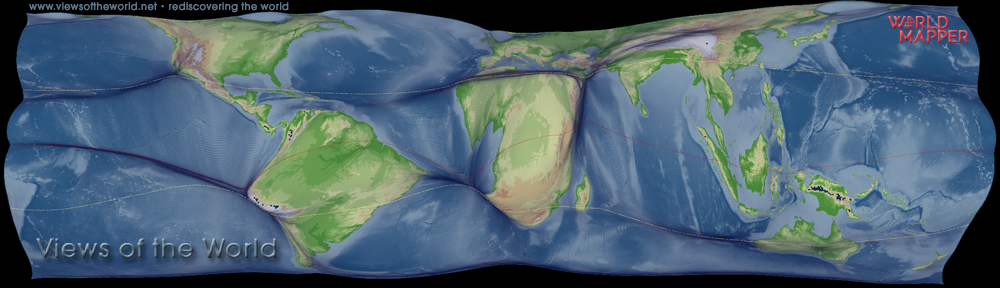
Starting today the world gathers in Durban for the COP17 climate change summit. In times where economic growth is more anticipated than a decline in carbon emissions, the prospects for a successful successor to the Kyoto protocol (coming to an end in 2012) is quite unlikely, and it will be interesting to see, what ‘success’ the delegates have to announce for saving the world from mad and often also tragic consequences of changing climate patterns.
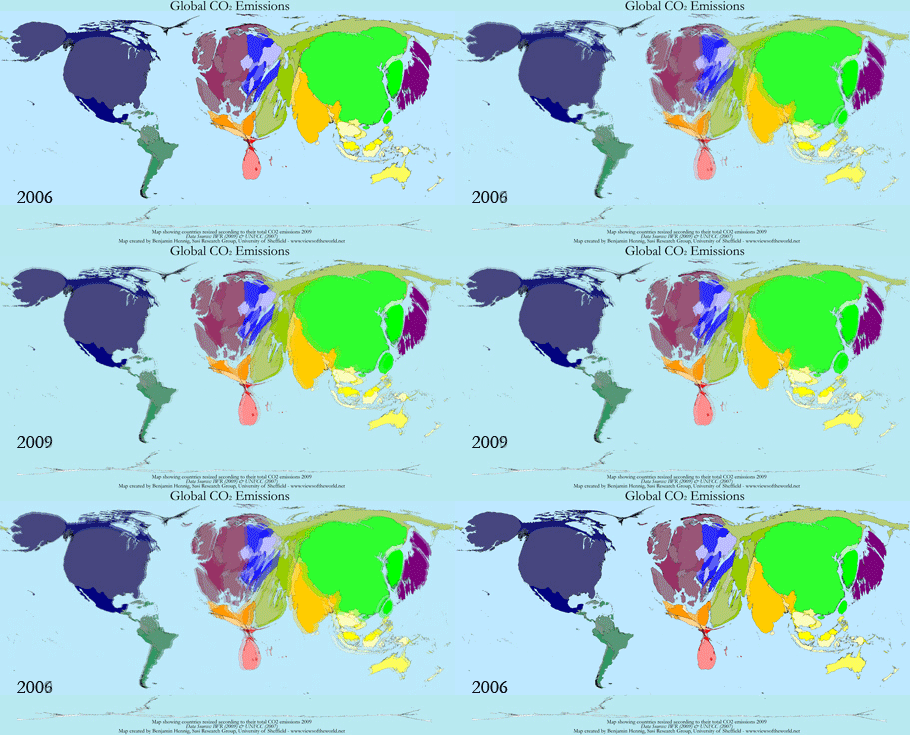
The most recent complete views of global carbon emissions are still those released by the United Nations for 2008 which I updated using some additional information to reflect the impact of the global economic crisis in 2008/09 as part of an update to the series of worldmapper cartograms on carbon emissions. The following two maps are a reminder of these cartograms that demonstrate, how big the industrialised nations still are in their carbon emissions – only followed by those regions (namely China) that produced much of the goods that are consumed in the wealthier parts of the world.
Time for a change? That was before the crisis…the outcome of Durban 2011 could be a manifestation of this image – with absolute levels hardly declining (if at all):
Carbon Emissions 2009:

(click for larger version)
Animation CO2-Emissions 2006-2009:
The content on this page has been created by Benjamin Hennig. Please contact me for further details on the terms of use.